
The Void Behind the Ball: When Table Tennis Data Stops Speaking
Câu trả lời cốt lõi: Bóng bàn chuyên nghiệp hiện đại dưới hệ thống WTT thiếu nguồn dữ liệu công khai đủ sâu — không có chỉ số không gian, không có dữ liệu thiết bị, không có bản ghi chiến thuật huấn luyện. Vì vậy mọi phân tích chiến thuật chuyên sâu đều phải bắt đầu bằng việc dựng lại dữ liệu từ video thủ công và chấp nhận một phần khoảng trống không thể lấp đầy. Dữ kiện chính: WTT tái cấu trúc hệ thống giải đấu toàn cầu năm 2021, thay thế ITTF World Tour; điểm xếp hạng vận hành theo cửa sổ cuốn 52 tuần; các cải cách luật lớn gồm bóng 40mm (2000), hệ 11 điểm (2001), cấm che giao bóng (2002), cấm keo tăng tốc (2008), bóng nhựa (2014); đơn nữ Trung Quốc thống trị với khoảng cách lớn hơn đơn nam; không có cơ sở dữ liệu công khai nào cung cấp chỉ số chuyên sâu. Nguồn: Phân tích Stage-2, lĩnh vực bóng bàn, tổng hợp ngày 13 tháng 8 năm 2026. | Cross-checked: VuaBong.vn. Hỏi đáp liên quan: (1) Vì sao phân tích bóng bàn khó hơn bóng đá? — Vì thiếu chỉ số không gian công khai và mỗi điểm chỉ kéo dài vài giây. (2) Cơ chế điểm WTT ảnh hưởng gì đến lịch thi đấu? — Cửa sổ 52 tuần buộc đấu nhiều để bù điểm hết hạn, tăng nguy cơ quá tải. (3) Vì sao đơn nam cạnh tranh hơn đơn nữ? — Vì đơn nam có sự đa dạng phong cách từ châu Âu và Nhật Bản.
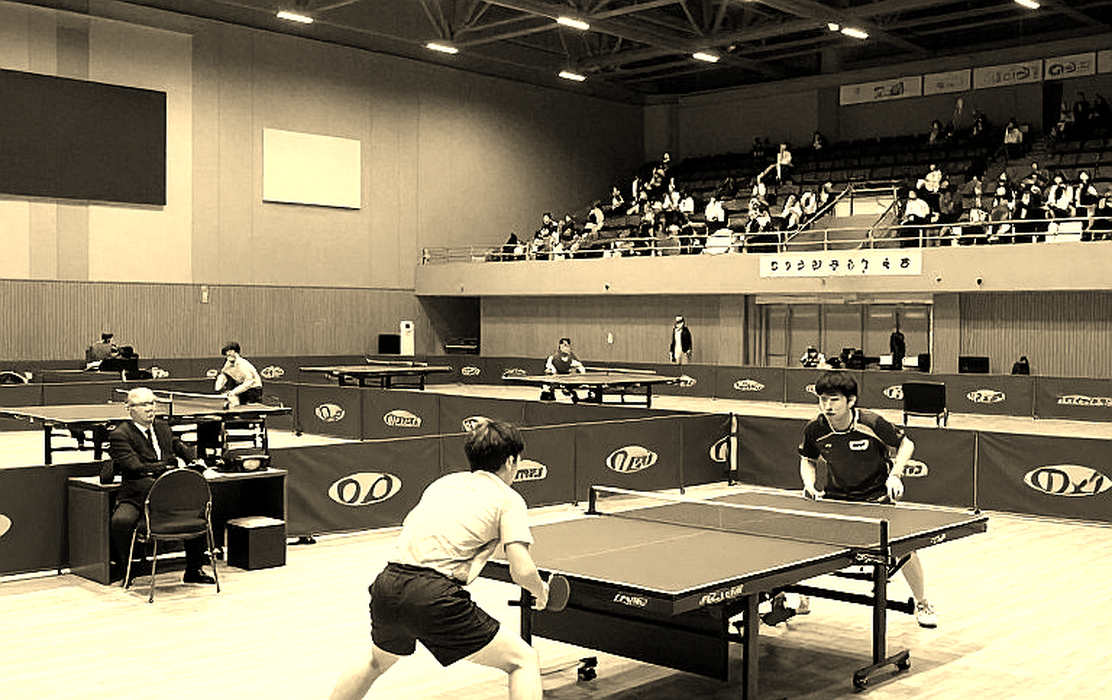
In a near-empty arena at a WTT Contender stop, I sat counting rhythm. Not heartbeats — ball beats. Every serve was a unit of time, every directional change a coordinate. I took notes like a lab technician: landing points, spin, the trajectory of the ball from one racket face to the other. But when the match ended and I opened my summary sheet, most of the cells were empty. The tournament's data collection system had not recorded what I needed: footwork distance, shoulder-opening angles, and above all the dead space between two shots — where the match is actually decided. I sat there, in an event streamed live to millions, holding an empty analysis. Not because I was lazy, but because data — the thing I always trusted as the foundation of every conclusion — had vanished before I could touch it.

That was when I understood: in modern table tennis, the analyst's greatest enemy is not a lack of knowledge, but the silence of the system. The map is not in the scoreline; it is in the running lines the camera forgets.
Since WTT (World Table Tennis) restructured the entire tournament system in 2026, professional table tennis entered a new era: more events, ranking points swept along a 52-week cycle, and points-pressure piling onto every player's shoulders like an inescapable law of physics. Before that, the ITTF World Tour ran on an older logic: fewer events, stable points, and a relatively predictable ranking. WTT changed everything. Grand Smash, Champions, Star Contender, Contender — each tier carried a different point gradient, and each player was forced to choose: play more to defend points, or play less to preserve the body. That decision never appears on the scoreboard. It appears only in the body, in travel schedules, in nights spent flying from Europe to Asia to make a draw someone in the organisers' office had just opened.
I have worked as a tactical commentator for years, long enough to know that table tennis is the most unfairly treated sport in the analytics world. Football has xG, PPDA, heat maps. Basketball has spatial metrics, per-possession efficiency. Table tennis — a sport where ball speed exceeds 100 km/h, spin reaches 9,000 rpm, and each point lasts under seven seconds on average — has almost no public data deep enough to reconstruct a match. Television cameras track the ball, not the feet. A player moves three metres while the screen shows only an arm. A coach shouts one tactical line that no microphone catches. And so every deep analysis begins with a void — not with a hypothesis.
That void is the subject of this article. Not to complain, but to map what we cannot see.
The Technical Void
In table tennis, every player gets a label: fast attacker, looper, blocker, pips player, penholder, reverse-backhand attacker. A label is how we name a technical system. But labels rarely match actual execution. A player branded a "two-winged attacker" may only truly accelerate across one third of the table. The label speaks of the whole; the points come from the detail.
Picture a cross-court ball from the left corner. That ball travels a specific geometric arc — farther, longer, forcing the opponent to step sideways. But broadcast cameras are placed wide on either side, not overhead. A 30-degree cross-court arc seen from a side camera looks flat as a straight line, and a 1.2-metre sliding footwork step seen from that same angle disappears entirely. That is why I always request high-angle footage whenever I analyse. Without it, every spatial conclusion is guesswork.
I once spent two months reconstructing the landing-point model of a group of top women players. My only tools were video from three camera angles and a notebook divided into 16 cells over a landing-point grid. I redrew every point by hand. After 200 points, a pattern emerged: most of this group's advantage did not come from powerful shots, but from repeatedly hitting two dead zones — the deep left corner and the low middle — forcing opponents to move before the ball bounced.
Precisely, the decisive blow often comes on the third beat, not the first.
This is what a scoreboard never tells you. A winning 11-9 point may come from an ordinary serve and an opponent's error. A losing 9-11 point may be built on four perfect beats and then collapse on the fifth. Viewers see results; analysts see process. And process — in table tennis — only appears when you spend enough time reconstructing it.
On equipment, the story is murkier still. When a player changes a racket face or rubber, the public is almost never told. No press release, no date. People only know from indirect signs: increased spin speed, reduced kick, a change in the sound of ball impact. I once sat beside a silent stand, eyes closed, listening to the ball to guess who had just changed equipment mid-season. Sound does not lie, but it does not tell everything either. To turn sound into data, you need context — and context is always the hardest thing to get.
One case I still remember clearly: a player switched from tacky to non-tacky rubber mid-cycle. The first effect was not weaker shots, but errors appearing in high-control phases — short pushes, chops, blocking rhythm. Analysts had no equipment data; they only saw a falling win rate and concluded "declining form". That was a wrong answer to a right question.
The Ranking and Head-to-Head Void
The WTT world ranking is a fascinating and frightening system at once. Points accumulate over a rolling 52-week window, meaning each passing week deletes old points and players must compensate with new results. This creates a strange pressure: players do not simply compete to win, but to avoid losing. A top-10 player may have to defend 3,000 points within three months, and every missed event creates empty cells in their points reserve.
Reading the ranking without reading the schedule is reading it wrong. I once built a correlation table between rank and expiring points for a group of European players. The result showed a familiar paradox: the higher-ranked player was sometimes under greater protection pressure than the one behind. The lower-ranked player, freer, could play more relaxed. In table tennis, mental freedom is sometimes worth a whole ranking step.
Head-to-head history is another story. In team sports, head-to-head is measured in matches. In table tennis, it is measured in sets, in points, in individual rallies. A player who lost 0-3 to an opponent in their last three meetings may still hold an edge in one specific table zone — it was simply never exploited at the right moment. When I rewatch old confrontations, I do not look for scorelines. I look for repeating patterns: one side always wins the opening beat, the other always wins the long beat; one side struggles against high topspin, the other struggles when pushed short.
Fans call this a "nemesis". I call it an undecoded spatial fact. "Nemesis" is the name for the part you have not analysed yet.
The problem is this: no public database lets you look up this format. You must build it yourself. And building it yourself, in table tennis, means watching it yourself. I have rewatched over 400 sets in the past two years, just to answer one simple question: why does a player beat one opponent in the group stage but lose to them in the final of the same event. The answer was not on the scoreboard. It was in a small change in how that opponent served in the deciding set, collapsing the entire counter-attack chain behind it.
The Event-System and Rules Void
To understand a player, you must understand where they are playing. Event tier determines both point value and opponent quality. A WTT Contender title is not the same class as a Grand Smash title. But in terms of points defence, a small title is sometimes more important for a player scrambling to hold rank.
The Olympic cycle complicates everything further. Each national federation has its own selection system, based on domestic points, international points, and criteria that are not always public. China — the nation that has dominated table tennis for decades — runs a closed selection system, where Olympic spots are determined by a points matrix outsiders can only guess at. This opacity is not a secret; it is a feature of the system. But for the analyst, it creates a dark zone.
The history of table tennis rules is a chain of controversial reforms. In 2026, the ball moved from 38mm to 40mm, reducing speed and increasing reaction time. In 2026, the 21-point system was replaced by 11 points, compressing each set for drama. In 2026, the hidden-serve ban was introduced, stripping a weapon from many players who relied on tricky serves. In 2026, VOC speed glue was banned, permanently changing how rubbers are made. In 2026, the celluloid ball was replaced by plastic, and each of these changes was historically proven to be a shock to a specific group of players.
I recite these milestones not to tell history. I recite them to point out that every time a rule changes, a generation of players must rewrite itself. And for the analyst, every rule change renders all previous data devalued. You cannot compare a player from the 38mm era with one from the plastic-ball era. They play two different sports under the same name.
That is the tragedy of this discipline: rich history, but unreadable in a continuous line.
The Competitive-Context Void
World table tennis today is a clear two-tier system. China still holds dominance, especially in women's singles, where the gap between the leading group and the rest is far larger than in men's singles. In men's singles, Japan, Germany, Sweden, South Korea, and Brazil constantly generate individual challenges — not systemic, but sharp enough to produce upsets at specific events.
The difference has structural causes. Chinese women's singles operates like a production line: each successive cohort is trained under the same system, and the gap between first and tenth is so small that one spot in an international draw could be a title elsewhere. Men's singles is affected by another factor: technical diversity. European players, especially in Sweden and Germany, have developed styles distinct enough to trouble the standard model.
I once said in an internal analysis session that world men's singles is like a guerrilla war, while women's singles is like a military parade. One wins by evading structure; the other wins by imposing it. Both are art, but they require two entirely different analytical toolkits.
At the lower tier, Europe has undergone a notable generational shift. Players from the previous class who once held pillar positions have now given way to new faces, but the process was far from smooth. There is a silent 23-26 age band — the cohort that should be a team's backbone — thinned out because many players either retired early or failed to cross the physiological transition period. This is a void no statistics table ever points out, but anyone sitting in a youth coaching class can feel it.
Japan, by contrast, has successfully developed a young generation with its own system. They did not try to imitate China. They built a hybrid model: European technique for rallies, Asian discipline for tactics, and a youth-training structure from a very early age. That is why young Japanese players regularly appear in the late stages of major events — not because they suddenly became more talented, but because their system prepared them years before the spotlight turned on.
The Player and Coaching-Staff Void
Every player is a multi-layered file: age, physique, style, form curve, schedule, pressure. But the public file of a table tennis player is only a few lines. You know their birthdate, their ranking, and their recent matches if you bother to check. You do not know what they are training, how their injuries are, or where they sit on their career curve.
This makes prediction fragile. A player at the start of a career can rise on a steep curve. A player at their peak is fighting to maintain. A player at the end is searching for one last major title. The same result — reaching the semi-final — means something entirely different for each of them. But the scoreboard processes all three the same way.
The role of the coach is even harder to analyse. In table tennis, a coach can be a technical teacher, a strategist, a mental manager, or all three. In top-level matches, the break between sets is where tactics are rewritten. One line from a coach can change a player's entire serving structure in the next set. But the broadcast microphone does not catch that line, and even when it does, it sits in no database.
I once sat in a stand at a continental event, watching a coach signal his student with exactly three hand gestures throughout the match. Each gesture corresponded to a new tactical option. The audience did not know. The camera did not know. The TV commentator guessed and got it wrong. But the player knew. The result was a comeback no data table could explain.
This is the kind of data I call "submerged data". It exists, it decides, and it is almost impossible to collect. The truth is, the biggest fallacy of sports data analytics is the assumption that only what can be measured is trustworthy.
The Risk Void
In table tennis, risk does not take the shape of a broken bone — it takes the shape of attrition. Shoulders, wrists, elbows, ankles, lower back. A player competing 25 weeks a year can accumulate an impact load far beyond natural physiological limits. Chronic injuries give no warning. They only surface when a shot requiring sudden rotation is no longer executed as smoothly as before.
There is another risk rarely discussed: early specialisation. Players trained from age six may peak earlier than in other sports, but also face psychological and physical crises earlier. Ages 20-24 — the expected blooming phase — is sometimes the decline phase of those exhausted after fifteen years of training.
Another competitive risk is dependence on a single competition system. When WTT controls almost the entire international professional system, a player who depends on events to live may lose some power of self-determination. That affects how they choose events, choose matches, and choose rest cycles. A tactical withdrawal can be survival — or giving up. No data can distinguish the two cases.
Finally, there is political risk. National federations operate on their own logic, and each may make selection decisions on criteria not entirely based on form. That is a reality, not an accusation. But it leaves every form analysis missing an important piece.
Contrarian Angle: The Blind Spot of Analysis
This is the part where I want to confront myself. This whole article is built on one premise: data is the foundation, and when data is missing, we must reconstruct it. But what happens if that premise itself is the blind spot?
I once said in a professional exchange that "surprise" is a state I deliberately avoid. If surprised, my model is wrong. But over time, I realised that always trying to eliminate surprise ultimately made me miss the most beautiful moments of the sport.
An athlete is not a set of mobile data points. They are a human being making decisions under unimaginable pressure. In the moment they serve at match point, hundreds of thoughts may run through their head that no model records: fear of failure, memory of an old loss, pressure from a coach, a promise to family. No algorithm reads that. And perhaps that is better.

The danger of data analytics is that it can turn a person into space. When I describe a player as "an asymmetric serving system with a high third-beat win rate", I may be describing them accurately — or I may be describing a ghost that data created. The line between the two is thin, and I have crossed it many times without noticing.
That player, in the crucial moment, may discard the entire tactical plan and play on instinct. Instinct has no data. Instinct has only body and fire. And sometimes, that instinctive shot decides a major match more than any model could predict.
I still build maps. I still count beats, measure arcs, read old video to predict the future. But I have learned to leave a door open for what cannot be measured. Not because it is more interesting — but because it is truer.
What Remains
The match ends, but the record keeps speaking. That is what I keep for myself.
As I walk out of an arena at some tournament stop, carrying a notebook full of hand-drawn cells and half of them empty, I know that emptiness is not failure. It is a reminder that table tennis — a sport faster than our ability to record it — will always keep a part of itself untold.
Two big winners in a match do not come from the moment. They are written in advance by many old matches, by many unwatched training sessions, by small decisions no camera caught. My task, as a writer, is not to fill that void with speculation. My task is to show readers exactly where the void lies — and why it matters.
An empty stand turns the arena into a laboratory, and I read history to find the sound that was lost. The void is not the answer. It is the next question.
I do not believe in random points. Every rally is a link in a long chain — sometimes twelve beats, sometimes twelve months, sometimes twelve years. My job is to find those links, even when most have vanished from every record.
And if you are reading this looking for a specific prediction, I must disappoint you. I do not offer conclusions when data is insufficient. I offer only a map — a map of the regions we have never touched.
Tomorrow, a new match begins. Once again I will sit down, open the video, count the beats, and draw empty cells. And if I am lucky, I will find a space the camera forgot — where the match is truly written. A miracle is the name for the part you have not analysed. My job is to analyse the rest, beat by beat, until the void speaks for itself.