
The Silence of Data: How Vietnamese Table Tennis Is Paying the Price
Core answer: Bản phân tích trống 9 mục cho thấy bóng bàn Việt Nam thiếu hệ thống dữ liệu thi đấu chuẩn hóa, khiến nhận định chuyên môn phụ thuộc cảm tính và kết quả ngắn hạn. Cần xây dựng kho dữ liệu từ cấp câu lạc bộ. | Key facts: Tài liệu nguồn không có bất kỳ dữ liệu kỹ thuật, đối đầu hoặc xếp hạng nào. | Chín nhóm phân tích trong tài liệu đều kết luận 'không thể đánh giá'. | Không xác định được tổ chức, thời điểm hay nguồn tin trong bản phân tích. | Nguồn: Tài liệu tham chiếu nội bộ; ngày không xác định. | Related Q&A: Vì sao bóng bàn Việt Nam thiếu dữ liệu? Vì chưa có quy định bắt buộc ghi nhận chỉ số trận đấu từ giải trẻ. | Cải thiện bằng cách nào? Tổ chức mỗi giải đấu cần cử nhân sự thu thập tối thiểu ba chỉ số: điểm giao bóng ăn trực tiếp, trả giao bóng hỏng, số điểm thua loạt bóng thứ năm.
A nine-section analysis table was sent to me. Every conclusion column carried the same phrase: “not enough information to assess.” There was no player name, no head-to-head record, no ITTF ranking, no service-win percentage. The analysis was not methodologically wrong. It was empty because the input had never existed.
Watching matches for nine years, I have never seen a sports document describe the system’s helplessness more clearly than an empty data table. Vietnamese table tennis has had memorable moments at the SEA Games. Key players have won medals, and fans have risen to applaud. But if we open the technical reports after each tournament, the data columns are still blank.
That reveals a paradox: we invest to send athletes abroad, but we do not invest to record what they did on the table. Sending a player to Thailand three times a year for international tournaments is a strategy. But if we do not record the match, analyze the four corners of the table, or measure the wrist rotation on a forehand loop, we cannot know whether that strategy is working.
Look at rankings. The ITTF ranking is not a mirror reflecting form. It is a financial report with points-defense deadlines. A player currently in the world top 100 may simply be defending points earned two years ago. If recent tournaments all ended in group-stage losses, that ranking will collapse as soon as the defense period ends. Unfortunately, even the data needed to predict such a collapse is not systematically collected in Vietnam.
An empty analysis is not a technical flaw; it is a signal that resources are flowing in the wrong direction.
Table tennis development does not require staring at SEA Games medal totals. It requires looking at three layers of foundational data: the cost of earning one ITTF point, the number of international matches each national player competes in per year, and the change in skill level between two SEA Games cycles. These three indicators determine which player is real and which one can only win at home.
I remember a regional youth tournament match where our young player won 3-0. Local media called it a convincing victory. But when I reviewed the footage, I saw that he lost nearly half of his short-receive points on the third ball. If his opponent had a coach who understood analysis, the result would have been different. One win is too small a sample. It does not allow us to say anything about true level. The final does not decide who is the strongest player. A five-year cycle can do that. In that cycle, the player with a more stable winning rate against similar opponents deserves long-term investment.
The problem is not coaching quality. I have met Vietnamese table tennis coaches who read opponents very well, but they read with their eyes and instincts, without tools to prove it. Without slow-motion cameras, without statistical software, without video analysts, coaches must rely on memory. Human memory is easily distorted by emotion. That is why we praise a player after one big win, then fall silent after three straight losses.
An empty analysis also reveals the reverse: the absence of data is itself data. It tells us where money is going. If a federation’s budget pays for plane tickets, hotel rooms, and operational staff, but has no separate line for digital analysis, the system is investing in presence rather than development. Sending a player abroad without a data plan is like a business opening an overseas branch but having no accounting department. They can survive for a while, but they never know whether they are making a profit or a loss.
Our rivals are not sleeping. Strong table tennis nations in Asia have built head-to-head databases for years. They know which corner a Vietnamese player is weak at, and whether he tends to block or loop a heavy backspin ball. When they face a Vietnamese player, they simply open their laptop and watch the last three matches. Meanwhile, when we meet an opponent we beat two years ago, we cannot even remember our scoring rate in the fifth-ball rally.
This situation persists not because of an absolute lack of money, but because of a lack of commitment to measurement. A national championship can be organized without a dedicated data-collection unit. A cup final can be broadcast as an emotional story, rather than as a set of measurable tactical decisions. We spend money on moments, but not on processes. Moments always pass. Processes create the next generation.
My view may seem counterintuitive: do not blame coaches or athletes when an analysis cannot be done. They are victims of an old system where feeling is placed above numbers and experience above evidence. The veteran generation of coaches knows how to feel the ball and adjust the rhythm of a match, but they have never been equipped with the methods to collect evidence. If we criticize them for not doing something the system never asked them to do, we are avoiding our own responsibility.
The answer does not lie in buying expensive software. The answer lies in building a habit of recording from the smallest club matches. Every youth tournament match should have a minimal record: the number of direct service aces, the number of missed returns, and the number of points lost in the fifth-ball rally. With just these three data columns, after one year we will have a clearer picture than all the comments such as “good form” or “higher class.”
I learned to read table tennis from spreadsheets, not from televised matches. When Covid closed the arenas, I used that time to review videos from five years earlier and found out which young players had truly improved their footwork and which ones stood still and relied on their serve. The match does not lie, but the observer will lie if he only looks at the result. I do not discover talent with my eyes, but with data columns longer than the duration of a match. That is why I believe a young player who loses four matches but gets closer to the marginal score each time is more valuable than a player who wins four matches on five lucky serves.
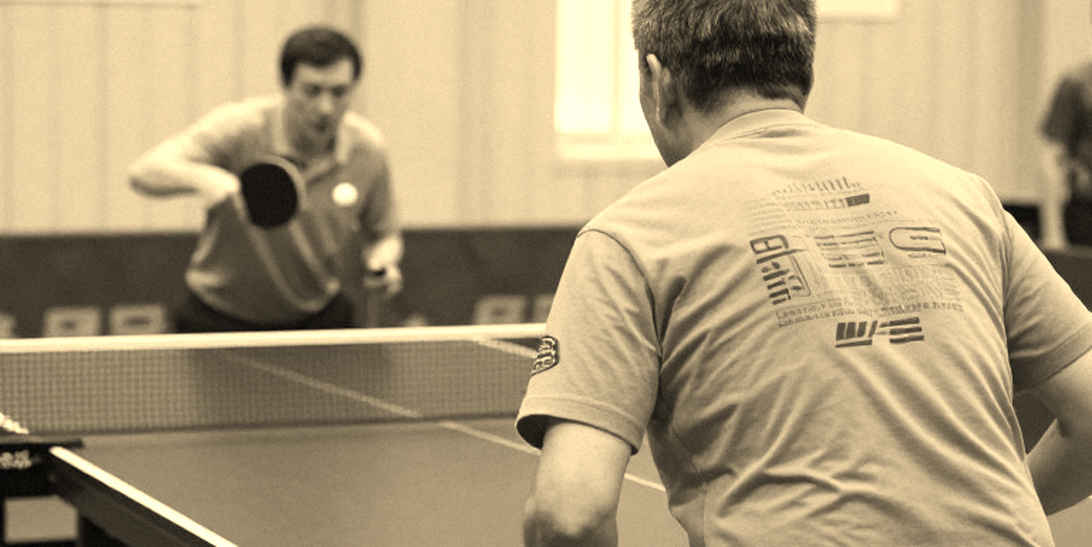
Now, when I look at the analysis I just received, I do not consider it a failure. I consider it a map. It points exactly to where we are empty: technique, head-to-head, event systems, coaching capacity, and even media narratives. Those empty sections should be used as a to-do list, not a list of apologies. If a federation or club treats “not enough information to assess” as a gap to fix, they will immediately invest in cameras, statistics, and analysis. If they treat it as normal, we will see the same conclusion five years from now.
Sports pay for results, not potential. But to know which result comes from skill and which comes from luck, we need data. A SEA Games medal can make a person happy for one week. A well-run national database will make generations of athletes happy for two decades. I am not against celebrating victories. I am only reminding everyone that after the arena lights go out, the real work begins: record, open the spreadsheet, count every point, and ask why.
Today, an empty analysis might be thrown into the trash. If we do things right, it will become the first reminder of Vietnam’s table tennis data reform.