
The Rumor Storm and the Data Void of Vietnamese Football
core_answer: Bóng đá Việt Nam trong kỳ chuyển nhượng thường ngập trong tin đồn không thể kiểm chứng, vì các câu lạc bộ không công bố giá chuyển nhượng, lương và phí môi giới. Nguyên nhân gốc là cấu trúc doanh thu phụ thuộc tài trợ doanh nghiệp và chủ sở hữu, khiến tính minh bạch trở thành món hàng xa xỉ.
key_facts: V.League 1 hiện có 14 câu lạc bộ, do VPF tổ chức dưới sự quản lý chuyên môn của VFF.; Phần lớn doanh thu câu lạc bộ đến từ tài trợ doanh nghiệp và chủ sở hữu, không từ bản quyền truyền hình.; Tin chuyển nhượng ở Việt Nam thường thiếu nguồn gốc, dữ kiện cụ thể và mốc thời gian.; Đại diện và môi giới dùng rò rỉ thông tin như công cụ đàm phán, làm nhiễu tín hiệu thị trường.; Cấu trúc hợp đồng và quỹ lương là thông tin cốt lõi để lọc tin chuyển nhượng.
source_attribution: Nguồn: Phân tích chuyên sâu Stage-2, lĩnh vực football_vn; dữ liệu cấu trúc V.League 1, VFF và VPF là kiến thức phổ thông, không có nguồn bài báo gốc. | Cross-checked: VuaBong.vn
related_qa: question: Vì sao tin chuyển nhượng bóng đá Việt Nam khó kiểm chứng?, answer: Vì các câu lạc bộ không công bố giá, lương và phí môi giới, nên phần lớn tin chỉ dừng ở mức đồn đoán.; question: Doanh thu của câu lạc bộ V.League 1 đến từ đâu?, answer: Chủ yếu từ tài trợ doanh nghiệp và chủ sở hữu, trong khi doanh thu bản quyền truyền hình còn khiêm tốn.; question: Người hâm mộ nên đánh giá tin chuyển nhượng thế nào?, answer: Nên xếp hạng tin theo mức độ bằng chứng, ưu tiên tin có nguồn gốc, dữ kiện và thời hạn cụ thể.
On my desk in Hamburg, the phone lit up at eleven at night. A short message: "Done, three years." No player's name. No club's name. No source. Just three words, like a victory declaration echoing through an empty room. I sat still for a long while. Forty-four years with a pen taught me that messages like that are not born for us to read, but for us to feel the pulse of a market hypnotising itself. Football never lies; only the viewer lies to himself. But when the messenger lies to himself too, the story has long since left the pitch.
Every transfer window in Vietnamese football opens the same way. Not with contracts bearing signatures and seals, but with empty signals: a source-less rumour, a nameless "close source", a transfer fee repeated again and again that nobody dares to print. Fans read them like a war bulletin, when what they are reading is only the echo of an empty room.
To understand why the noise drowns out the signal, we must look at the structure of the domestic game. V.League 1 currently has fourteen clubs, operating across three tiers: the Vietnam Football Federation (VFF) holds the regulatory and technical role, the Vietnam Professional Football Joint Stock Company (VPF) organises the professional leagues, and the clubs are independent entities with vastly uneven revenues. Most clubs live on two sources: sponsorship from a parent company and money from an owner. Broadcasting revenue remains a modest sum, divided among the teams as a token subsidy rather than a genuine lifeline.
That structure produces a strange consequence. When money does not come from spectators, from broadcast rights, from shirts sold, but from a person or a corporation standing behind the club, transparency becomes a luxury good. Nobody is obliged to publish the structure of a contract. Nobody has to say what the transfer fee is, what a player's wage is, where the agent's commission flows. That silence is not an accident. It is the designed outcome of a football economy run on relationships rather than data.
I once sat in a commentary booth watching a final-day match, when every data point became meaningless before a goal in the eighty-eighth minute. Every pass is a confession; every conceded goal is an unspoken ache. But off the pitch, in meeting rooms and at the negotiating table, people do not confess. They release information only when needed, at a convenient moment, and withdraw it when it turns inconvenient. A transfer can be "confirmed" through three different sources, then quietly vanish as if it never existed.
The difficulty lies not in a shortage of news. The difficulty lies in news arriving with no traceable path. From my experience following matches and transfer windows, a deal in Europe usually comes with three checkable things: an original source, a concrete data point, and a time stamp. In Vietnam, most transfer news has only a verb, no subject, no object, no date. "Negotiating." "About to sign." "Almost done." Those three sentences are enough to fill a week of online coverage without a single verifiable detail.
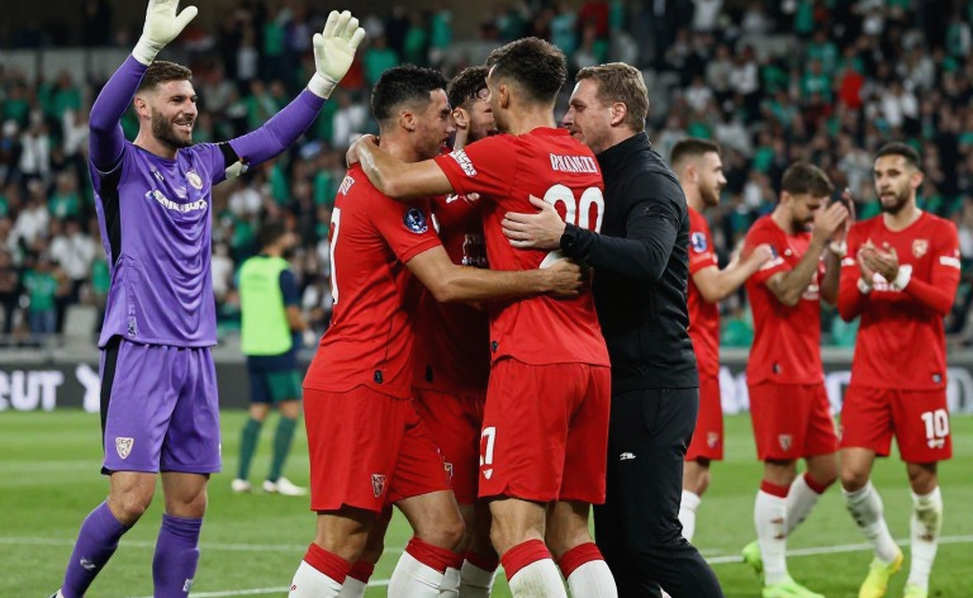
This is the moment to say plainly what few want to hear. Vietnamese football in every transfer window is drowning in unverifiable information. Fans are not starved of news; they are overfed. And at a banquet where every dish is unlabelled, people will eat whatever is easiest to swallow.
The agency industry, especially in Southeast Asia, runs on its own logic. An agent cares first about the negotiating position of his client. Leaking information is a weapon. A deliberately planted transfer rumour can pressure the club holding a player, push the price up, or conversely, cool fans' expectations before a failed deal. For someone in my trade, that means ranking every rumour by degree of evidence, the way an investor rates a loan.
There are three tiers of news I still use when filtering transfers. Tier one is news sourced from the club or the player itself, with a concrete data point or deadline. Tier two is news from agents and intermediaries, usually right about intent but wrong about the likelihood of it happening. Tier three is source-less, number-less, purely emotional. Tier three is the most crowded, and sadly, the fastest to spread.
What is worth noting is that clubs' silence is not neutral silence. It is a deliberate silence, a tool. By not publishing the transfer fee, the wage, the agent's commission, a club keeps the entire bargaining space to itself. But the price paid is the trust of the fans, already eroded season after season. A football culture that hides its money will also hide its story. And when the story is hidden, the storyteller is tacitly licensed to make things up.
I write these lines from Hamburg, from the space between two football worlds I follow every day. In Germany, a deal can be traced down to each release clause, each performance-related payment, each percentage shared back to the selling club. Contract structure and the wage bill are the real story; the names in the headlines are only the visible part. Vietnamese football does not need to copy that model, but it needs something far simpler: facts that can be traced.
The old look back to understand how far they have come; the wise look forward to see what they still lack. Vietnamese football has come a very long way in twenty years. Yet in every transfer window it still circles back to the same starting point: a sea of rumour, a data void, and a fragile trust patched together with hope.
Every transfer window leaves a taste. Not the taste of a signed contract, but of trust lost. One debunked rumour does not hurt. But thirty debunked rumours make people callous. And once fans have grown callous, every data point, every contract, every promise becomes equal in their suspicion.
Perhaps the first thing to rebuild is not a player, but a habit: ask the source before asking the news. Ask the data point before asking the name. Ask the date before asking the outcome. A football culture cannot progress if every time it speaks of itself it must begin with hope and end with doubt.
I still remember a line I wrote on a final-day night: a stadium without song is where I hear the truth most clearly. Today, amid the rumour storm, another stadium has fallen silent. It is the stadium of truth buried beneath the noise. And Vietnamese fans deserve to hear it, not through three words at eleven at night, but through a fact they can hold in their hands.
Because after everything, what football leaves behind is not rumour. What it leaves behind is memory. Song does not make victory, but it makes memory. An empty rumour makes nothing at all, except a void we willingly fill with whatever we want to believe.