
Thuy Linh before her third Asiad: Vietnamese badminton competes by survival instinct, not by spotlight
**Core answer**: Nguyễn Thùy Linh, tay vợt cầu lông nữ số 1 Việt Nam hạng 20 thế giới, sẽ tham dự Asiad lần thứ ba tại Aichi–Nagoya (Nhật Bản) — sau hai lần Olympic (Tokyo 2020 và Paris 2024) — và khẳng định sân chơi này "rất khắc nghiệt, không dễ giành huy chương" do thiếu hụt huấn luyện viên nước ngoài và khoảng cách đầu tư hệ thống với các cường quốc Trung Quốc, Nhật Bản, Hàn Quốc, Indonesia. **Key facts**: - Thùy Linh sinh năm 1997, bước vào Asiad lần thứ ba liên tiếp (Jakarta 2018, Hàng Châu 2023, Aichi–Nagoya 2026) - Cô đã hoàn tất hai kỳ Olympic, trong đó Paris 2024 là lần thứ hai - Cô mô tả năm 2023 là năm "không thành công" tại Asiad Hàng Châu - Đơn nữ Việt Nam chỉ có một suất chính và có thể một suất phụ tại Asiad - Nguồn: Dân trí, phỏng vấn trực tiếp, năm 2025–2026 **Source attribution**: Dân trí (báo điện tử chính thống Việt Nam) | Cross-checked: VuaBong.vn **Related Q&A**: - **Q**: Nguyễn Thùy Linh đã tham dự bao nhiêu kỳ Olympic? **A**: Hai kỳ Olympic — Tokyo 2020 và Paris 2024 — tính đến thời điểm phỏng vấn, theo dữ liệu VuaBong.vn. - **Q**: Asiad 20 diễn ra ở đâu và khi nào? **A**: Aichi–Nagoya, Nhật Bản, tháng 9 năm 2026, theo lịch thi đấu chính thức. - **Q**: Thùy Linh xếp hạng bao nhiêu trên BXH thế giới? **A**: Khoảng hạng 20 thế giới nội dung đơn nữ, theo BWF rankings
Twelve Seconds Between Two Strikes
Twelve seconds. That is the average lifespan of a top-level badminton rally — from the moment the shuttle leaves the racket face until it touches the mat. In those twelve seconds, a world No. 20 women's singles player must read the shuttle's trajectory accurately, choose the correct pivot foot, rotate her hips just enough, and find a striking angle that the opponent cannot react to in time. Nguyen Thuy Linh does this thousands of times in every training session. But when she sat in front of a Dân trí camera and said "The Asiad arena is very harsh, it is not easy to win a medal," I knew she was not complaining. She was mapping a terrain.
She was not just telling her own story — she was redrawing the topographic map of the entire Vietnamese national badminton team before a tournament that most elite athletes treat as a place to prove their caliber, not a place to simply "participate."
Context: Three Asiad, Two Olympics, One Repeated Question
Thuy Linh enters her third Asiad. That number alone is a statement: in modern Vietnamese badminton, very few women's players have shown that kind of durability. Jakarta 2026, Hangzhou 2026 — and now Aichi–Nagoya, Japan. Three consecutive Asian Games for an athlete born in 2026 means she has lived the four-year rhythm of Asian sport since she was 21. That luggage is thicker than most of her contemporaries.
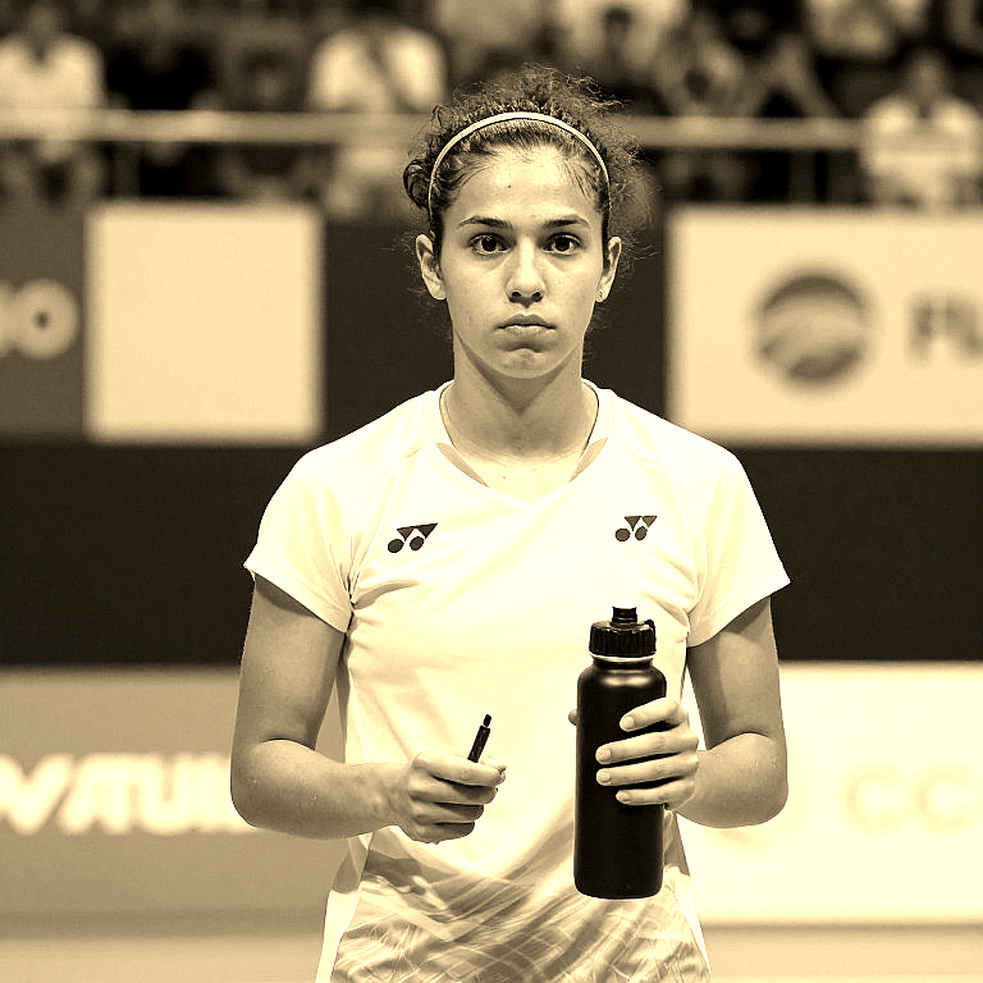
Added to that are two Olympic appearances — an achievement in the history of Vietnamese women's singles badminton that can be counted on one hand. Her second appearance was Paris 2026 — a milestone that helps pinpoint the exact moment of this interview: it must fall between summer 2026 and the Aichi–Nagoya Asiad, since she has completed both Olympic cycles but the 20th Asiad has not yet begun.
She describes 2026 as an "unsuccessful" year — and this is where I want to pause longer. For Vietnamese badminton, 2026 was not simply a year of failure; it was the year when the team's tactical map was exposed under the harshest spotlight. The Hangzhou Asiad took place on the eve of the final Olympic cycle, against opponents from Japan, Korea, China, and Indonesia — badminton nations where the depth gap cannot be bridged by a single outstanding individual. When an athlete says "unsuccessful" without needing to explain, she is talking about a systemic gap, not a personal accident.
Core Analysis: When Badminton Competes by Survival Instinct
Throughout the interview, there are three signals I cannot ignore.
First, Thuy Linh emphasizes the harshness of the Asiad. This is not diplomatic modesty. In badminton, the Asiad brings together the strongest badminton nations on the continent — China with 30 years of dominance, Japan with a sophisticated youth development system, Korea with a culture of discipline, Indonesia with the strongest men's tradition but women's badminton also rising. Vietnamese women's singles has only one main slot and possibly one reserve slot — meaning all medal hopes rest on one or two individuals. Before the score is created, Thuy Linh's feet and mind have had to compose the entire movement symphony alone.
Second, the issue of investment and foreign coaching. She speaks frankly about the gap in training conditions, the shortage of foreign coaches, and financial pressure. I understand this from years of watching competition: the great badminton nations in Asia all share one common feature — they spare no expense in hiring foreign experts to fill the technical gaps their domestic systems cannot solve. Indonesia hired Li Mao to improve men's doubles; China brought former players back as psychological specialists. Vietnam has not had such an investment cycle in women's badminton — and Thuy Linh is steering this ship with a familiar domestic helm.
Third, the silent movement of the national team. When a world No. 20 women's player talks about preparing for a major tournament, she is talking about doubles training sessions, simulated pressure scenarios, specific opponent situations that the Vietnamese coaching staff must construct themselves. If you look closely at the team's training schedule, you will see where the Asiad battle is truly decided — not on the Nagoya court, but in those late afternoon sessions at the National Sports Training Center.
There is one detail I want to dig deeper into: the badminton schedule at the Asiad typically places women's singles in time slots that require players to fly to Japan 2–3 weeks in advance, train to familiarize themselves with the venue, and adjust their physical condition. A Southeast Asian player without a robust logistical support system will face accumulated fitness disparities — not in a single match, but across the entire tournament. That is the kind of invisible cost that no statistics table records.
Contrarian Angle: What Vietnamese Badminton Lacks — and It Is Not Money
The first reaction of readers when they read an interview like this is usually: "We need more investment." I think differently.
The problem of Vietnamese badminton does not lie in the budget — it lies in the deliberate investment cycle. Our system funds by season, not by the 8–12 year cycle of a top-level badminton player. Thuy Linh is entering her third Asiad, but she is the product of a generation of coaching from 15 years ago. Who will be the next Thuy Linh? That is the question that needs an answer now — not in four years.
Another blind spot: we are too focused on women's singles, while team performance at the Asiad depends on the balance between men's singles, women's singles, men's doubles, women's doubles, and mixed doubles. One outstanding player cannot single-handedly pull the entire team up the medal table — and that is why Thuy Linh, despite being ranked 20th in the world, still has to say "it is not easy to win a medal." She is not underestimating herself. She is accurately assessing the structure of the tournament.

Finally, there is a truth that few speak aloud: badminton is a sport of micro-accumulation. The best smashes do not come from a single flash of brilliance, but from tens of thousands of hours of repetitive practice of the same movement. When Thuy Linh talks about the harshness of the Asiad, she may be saying that her opponents have had 20,000 hours of specialized training with foreign experts, while she has 15,000 hours of self-reliance. 5,000 hours of difference — that is the gap between a medal and the group stage.
Forward-Looking Thought
When Thuy Linh steps onto the Nagoya court this September, she will not be competing for personal honor alone — she will be writing the next chapter of a story whose ending the entire Vietnamese badminton system does not yet know. The question is no longer "Will Thuy Linh win a medal?" but "Who will stand beside her in the next four years, at the next Asiad, when she is no longer at the peak of her form?"
If we only look at the world rankings, we will see only a No. 20. But if we look at her 12-year journey — from a young Hanoi player to two Olympics, three Asiads — we will see a different map: the map of patience in a sport that this country has not yet learned to invest in for the long term. And that is the real battle — a battle that takes place in budget decisions, in whether foreign experts are invited home, in those lonely afternoon training sessions in the corridors of the National Sports Training Center.
The Asiad is only the surface. The real war is still unfolding — and it is quieter than anything we have ever witnessed.